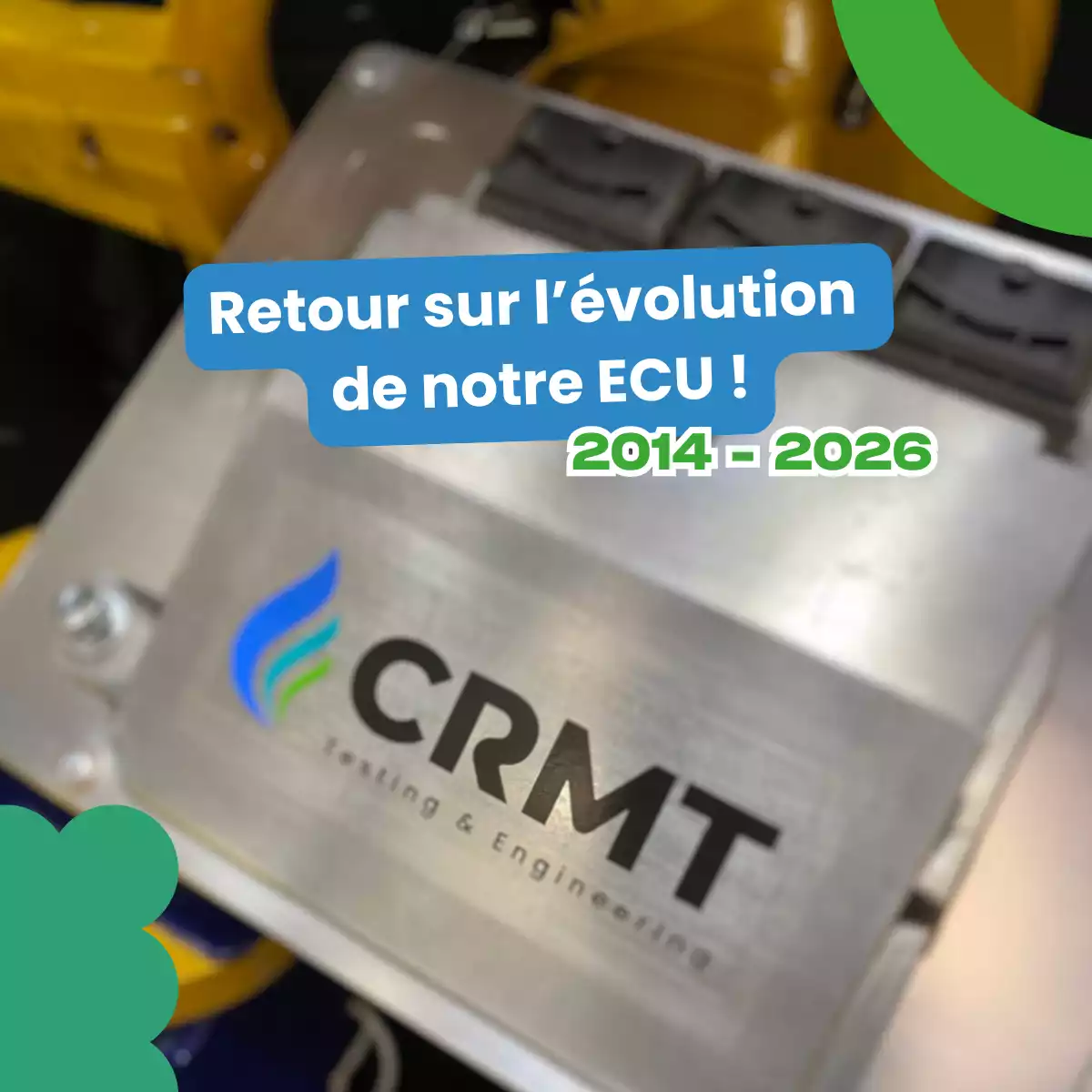
The CRMT ECU: looking back on 15 years of evolution of a modular, low-carbon controller
CRMT introduces its ECU: a flexible, modular controller in constant evolution.
Published on 07/05/2026
At CRMT, our ECU stands out for its modularity, designed to adapt and evolve with you.
The CRMT ECU: a core component of our projects
For around fifteen years, CRMT has been developing its Engine Control Unit, which ensures engine management. Also known as the ECU, its flexibility allows it to adapt to multiple vehicle typologies. Driven by a team specialising in systems development and programming, this tool has never stopped evolving. We wanted to take this opportunity to look back at the key milestones that have shaped it.
2014: Bringing our software in-house
Used by CRMT since the early 2010s, the ECU C5 incorporates both software and external hardware, designed to adapt to multiple vehicle typologies. It was within the framework of the Mogano VI project, focused on the development of a Bio-CNG engine compliant with the Euro VI standard, that we undertook from 2014 onwards the in-house development of our ECU software.
This project led us to design a demonstrator from A to Z, from the definition of the specifications through to concept validation, as well as a new version of the ECU software developed internally. This choice allowed us to customise its functionalities according to the specific needs of our projects, both operationally and in the long term. The software also provides us with greater flexibility to respond to developments in low-carbon energies, such as Bio-CNG, hydrogen and ethanol.
2016: Our ECU serving the evolution of our CEMS, an on-board measurement device
Our in-house mastery of the software also made possible the development of a tool that has since become essential to our real-world pollutant emissions measurement activities: the CEMS (Continuous Emissions Measurement System).
The CEMS enables measurements to be carried out over long periods, remotely and across multiple vehicle typologies. It monitors CO2, NOx, NH3 as well as particulate mass emissions, among others. It is used alongside the ECU, which simplifies the processing of measurement data by our teams.
2022: Bio-CNG retrofitted sweeper: engine control ensured by the CRMT ECU
The ECU C5 was also at the heart of the CleaNGo project, focused on the retrofit of a road sweeper converted from a Diesel powertrain to Bio-CNG. As part of this project, we handled the ECU integration, as well as the development and calibration tuning of the retrofitted engine on our test bench. Engine type approval was also carried out by our teams.
Beyond engine control, the ECU also ensures communication with the vehicle, allowing it to exchange the necessary information for its proper operation.
2023: Our ECU at the heart of our first hydrogen tests
We also put our ECU to use in the development of hydrogen engines, whether for direct or indirect injection. To meet the specific requirements of this powertrain, new software functionalities were developed in-house, further enriching the tool's capabilities. The ECU subsequently enabled the control of numerous hydrogen-powered engines.
2024: Vineyard straddler: the CRMT ECU controls a retrofitted E100 engine
The ECU C5 continued to evolve, adapting also to the control of ethanol-powered engines. We brought our technical expertise to the retrofit of a vineyard straddler tractor, converting a GNR engine to ethanol (E100). Our engineering department handled the engine adaptation, with tests subsequently carried out in our test cell to optimise combustion. The ECU software was revised accordingly, to ensure optimal integration of the engine within the system and the straddler.
2026: Development of a new software version
Today, the ECU C5 is still in constant evolution. Designed to operate with different types of powertrains and low-carbon fuels, this modular tool represents a genuine driver of innovation for our projects.
With this in mind, the ECU is currently being redesigned to better meet the shared expectations of measurement technicians and the engineering team. This evolution will notably allow us to address more precise needs.
In short, the ECU C5 is much more than a simple controller: it is an agile, modular tool, capable of addressing a wide variety of needs, and which continues to evolve at the pace of our clients' requirements.
More news
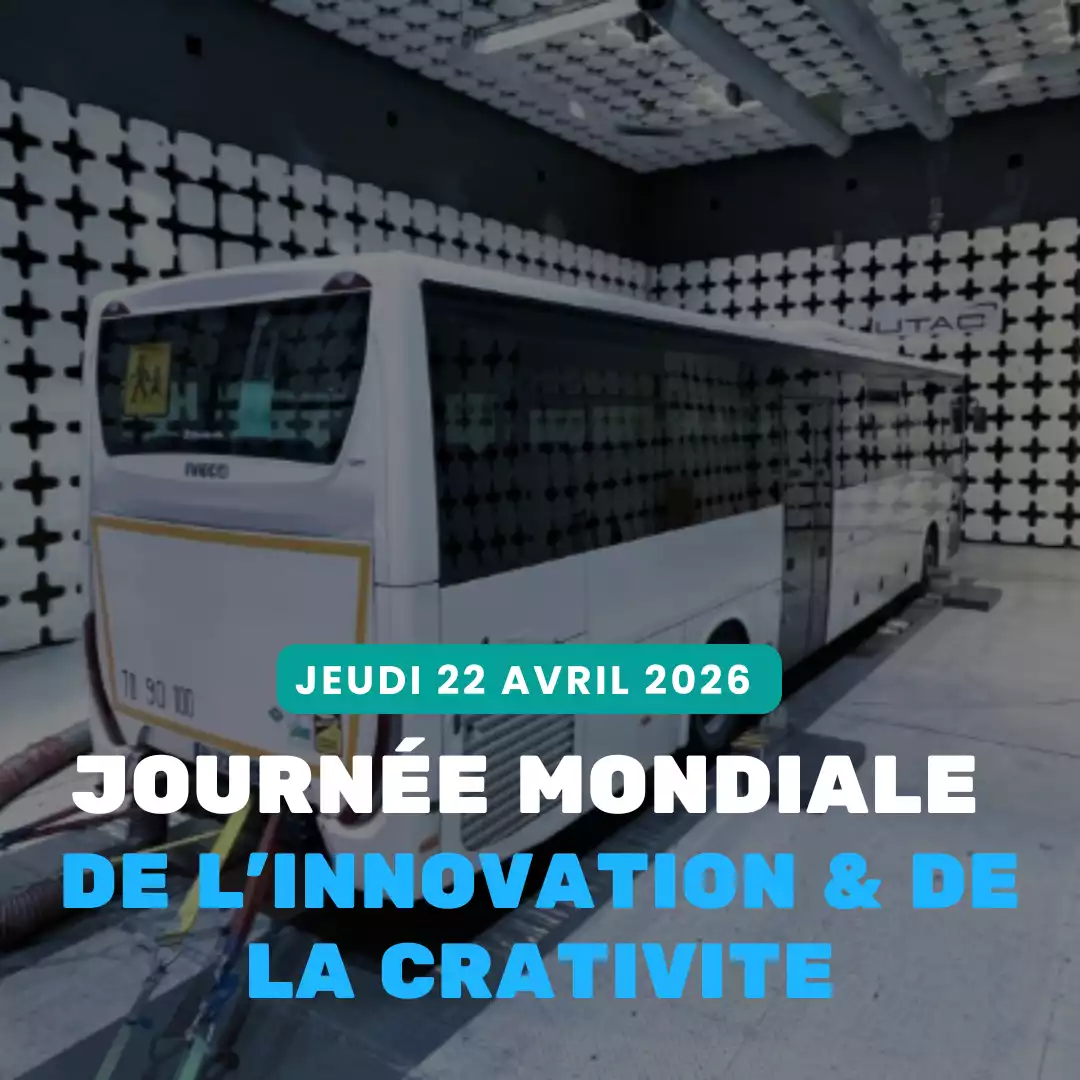
21 Apr 2026 - CRMT celebrates World Creativity and Innovation Day!
On this special day, discover the various innovations developed with CRMT’s involvement! Open ECU, BioCNG and hydrogen retrofit, as well as non-exhaust emissions measurement, CRMT has stood out by innovating for a more sustainable future!
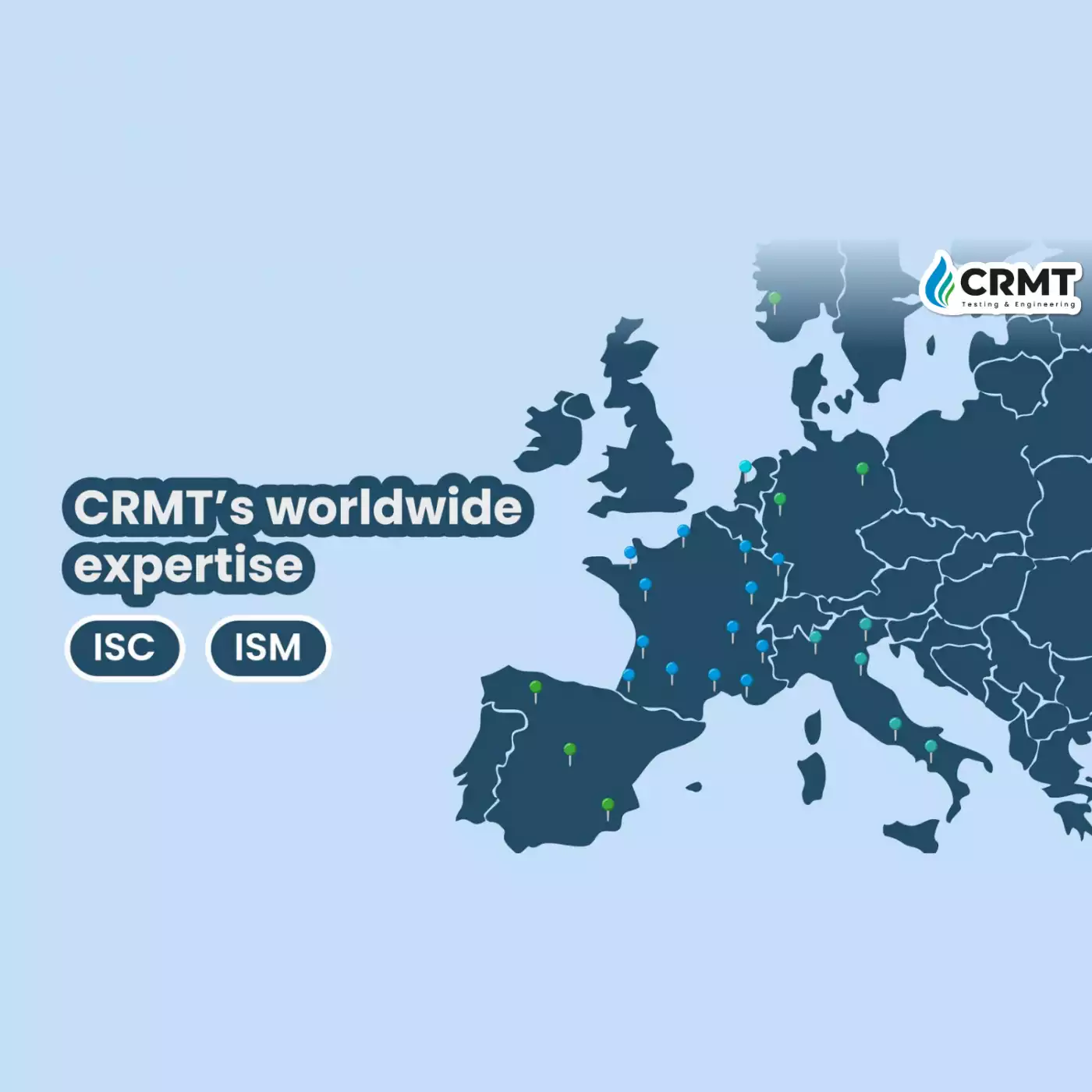
06 Feb 2026 - CRMT: Experts in measuring pollutant emissions from vehicles.
Discover CRMT's expertise in regulatory measurements using ISM and ISC cycles. We support manufacturers and engine builders in conducting their tests under real operating conditions, ensuring compliance with European regulations.
07 Jan 2026 - BioNGV retrofit, H2 engine testing, pollutant emissions measurement: 2025, a milestone year for CRMT
In 2025, CRMT reached major milestones in the energy transition of transport, with the type approval of the first BioNGV retrofit kit for Euro VI coaches, the development of hydrogen engine testing, and the deployment of pollutant emissions measurement campaigns across France and Europe. These advances confirm CRMT’s role as a key player in innovation and transport decarbonization.

14 Oct 2025 - CRMT acts in favour of air quality
On the occasion of the National Air Quality Day, CRMT reaffirms its commitment to cleaner air. With its expertise in alternative fuel engines and emission measurement, the company takes concrete action to reduce transport-related pollution.