Hydrogen Engine Conversion for a Massey Ferguson MF 6S Tractor
AGCO Beauvais Engineering chooses CRMT for its Massey Ferguson tractor hydrogen conversion project.
Hydrogen Conversion of a Massey Ferguson MF 6S Agricultural Tractor Engine
Hydrogen to Decarbonize the Agricultural Sector
As the energy transition accelerates, the agricultural sector is taking steps to reduce its carbon footprint. In this context, AGCO Beauvais Engineering has entrusted CRMT with an ambitious technical challenge: converting a diesel engine to run on hydrogen (H₂) as part of the ARHYSTOTE project, supported by the France 2030 investment plan operated by ADEME.
This project demonstrates CRMT's ability to support its customers in tackling breakthrough technological challenges, from initial engineering studies to engine test bench development and calibration.
Phase 1: Preliminary Feasibility Study
CRMT first conducted an in-depth feasibility study to define the technical and strategic approaches, drawing on its experience in CNG engine conversions and previous hydrogen engine development projects.
The objective was to assess the technical feasibility of converting this agricultural diesel engine to hydrogen, considering the specific challenges associated with hydrogen combustion, the availability of components on the market, and the customer's technical specifications.
This preliminary phase established a solid foundation and helped identify the project's key technical challenges.
Phase 2: Mechanical and Electrical Engineering
Following the successful feasibility study and the definition of a structured development plan, CRMT began the engineering work required to adapt the engine for hydrogen operation.
From a mechanical perspective, CRMT's in-house engineering department carried out an extensive study to adapt and source components specifically designed for hydrogen engines. Custom components were also developed, including pistons specifically engineered to optimize hydrogen combustion, as well as a complete intake manifold to ensure proper integration of the hydrogen injection system.
On the electrical side, CRMT was responsible for the complete design of the engine wiring harnesses.
The overall engineering process was particularly complex, requiring the simultaneous integration of hydrogen-specific components (ignition system, injection system, pistons, etc.) with an approach geared towards future industrialization. At the same time, engine performance and pollutant emissions had to be optimized to achieve the highest possible efficiency while meeting the customer's specifications.
Phase 3: First Engine Test Bench Campaign – Component Integration
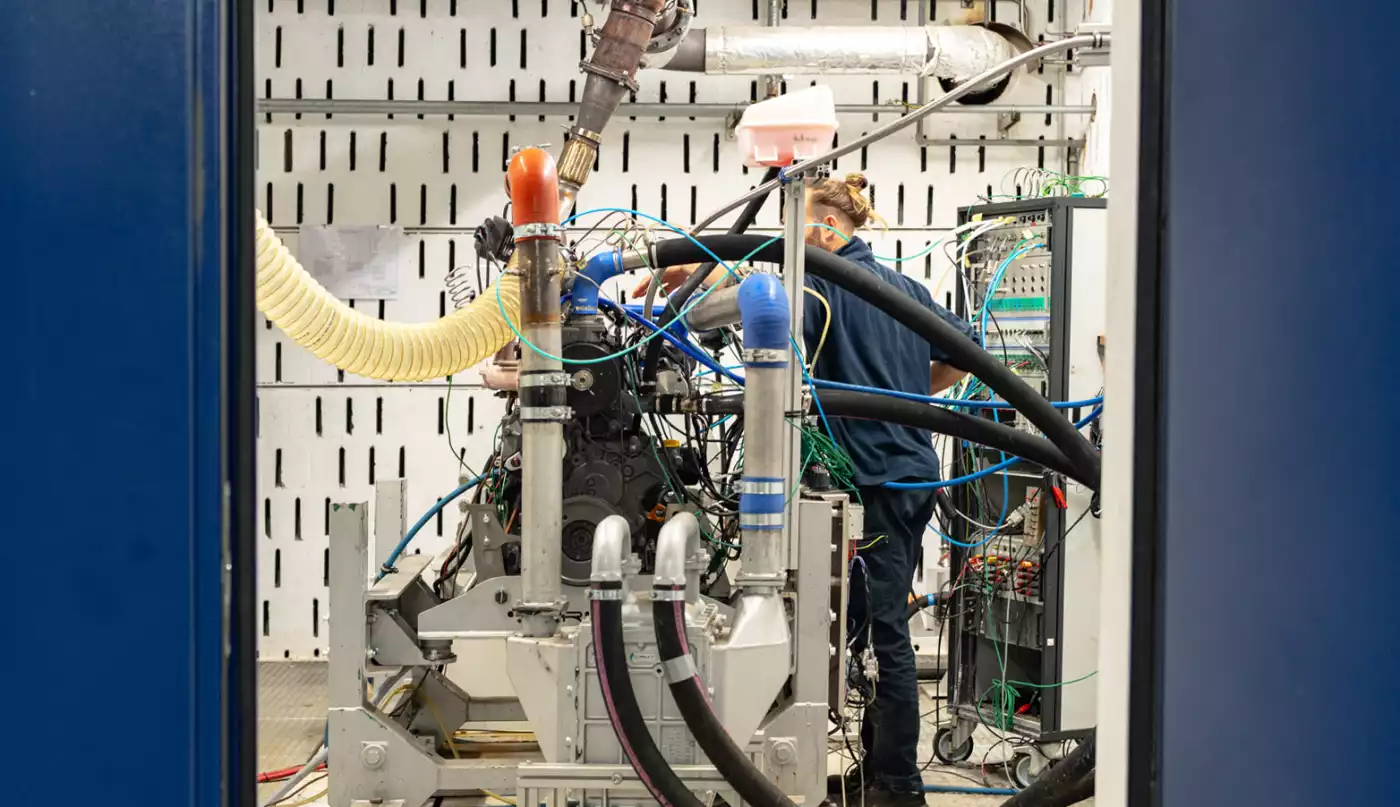
Once the engine assembly was completed, CRMT installed it on an engine test bench. This initial testing campaign aimed to:
-
Validate the engine's mechanical configuration.
-
Validate the electrical architecture and software.
-
Assess engine performance and emissions.
Following this first testing campaign, areas for improvement were identified, and several components were optimized to maximize engine performance.
Phase 4: Second Engine Test Bench Campaign
The project then entered a second testing phase, focusing on final engine calibration and optimization.
The objective was to fine-tune engine settings to maximize full-load performance while improving efficiency across the engine operating map. This phase also included the calibration of the necessary correction strategies and the optimization of control systems during transient engine operation.
CRMT then used its advanced measurement equipment to characterize exhaust emissions using a MEXA-ONE emissions analysis system, measure H₂ concentrations in blow-by gases using a dedicated sensor, and monitor hydrogen flow rates using a Coriolis flow meter.
Phase 5: Engine Integration into the Tractor
Once the final engine configuration had been validated, the engine was prepared for integration into the tractor, taking into account several key requirements:
-
Mechanical integration: Managing potential interferences and repositioning vehicle components where necessary.
-
Electrical and electronic integration: Ensuring proper interconnection and communication with the tractor's electronic systems, including the CAN network.
This upcoming integration phase will be carried out jointly by AGCO and CRMT.
Following integration, real-world testing will be conducted to validate the engine and tractor conversion under actual operating conditions. These tests will assess vehicle range, gather initial feedback on driving performance, confirm the successful integration of the complete system, and validate the environmental benefits achieved through the conversion.
This project highlights CRMT's expertise in converting diesel engines to alternative fuels, particularly hydrogen, as well as its ability to support complex projects from start to finish through its multidisciplinary expertise, in-house engineering department, and dedicated testing facilities.
Related projects
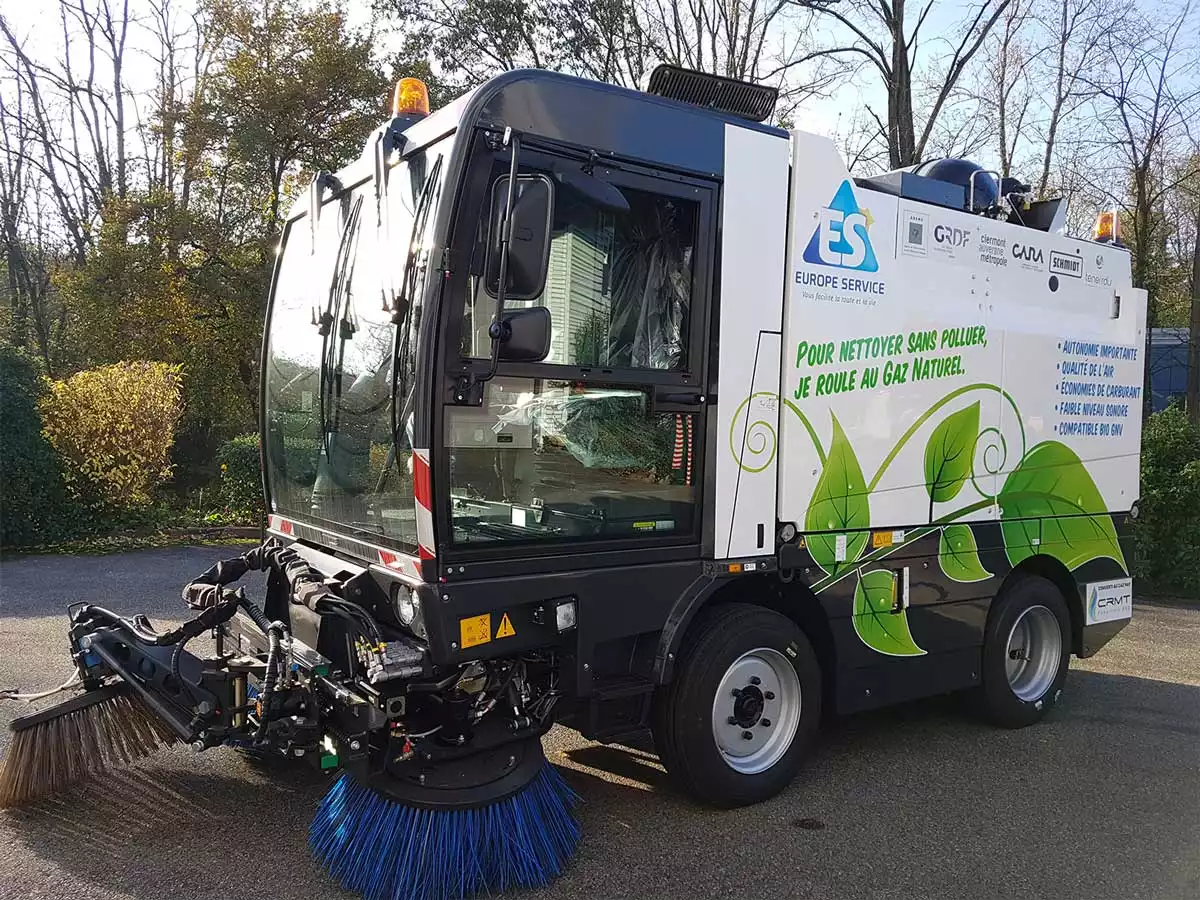
CleaNGo : the first CNG-powered backhoe sweeper
CRMT has developed a road sweeper, the CleaNGo, by transforming a diesel engine into a 100% natural gas engine, with the aim of offering a low-carbon alternative for urban cleaning.

Design of MOGAS (stationary natural gas engine)
The company has developed a new gas engine technology for generator sets

How to adapt an industrial tool for educational purposes?
How to adapt an industrial tool for educational purposes?

Design and development of Mogano VI (MOteur GAz Naturel EurO VI)
CRMT has developed a high-performance engine for heavy-duty vehicles